

About me &
my approach
My name is Shema, and I am a counsellor and psychotherapist accredited by the National Counselling & Psychotherapy Society (NCPS).
I work with adults, children and young people from a range of backgrounds and identities, including LGBTQIA+ and neurodivergent clients.
I work primarily from an IFS (Internal Family Systems) approach and have advanced IFS training in shame, anxiety and depression, alongside further IFS training for therapeutic work with children. I draw on a range of therapeutic approaches, exploring together what feels helpful for you. I also offer Intimacy from the Inside Out (IFIO) couples therapy and am a certified child and adolescent trauma therapist.
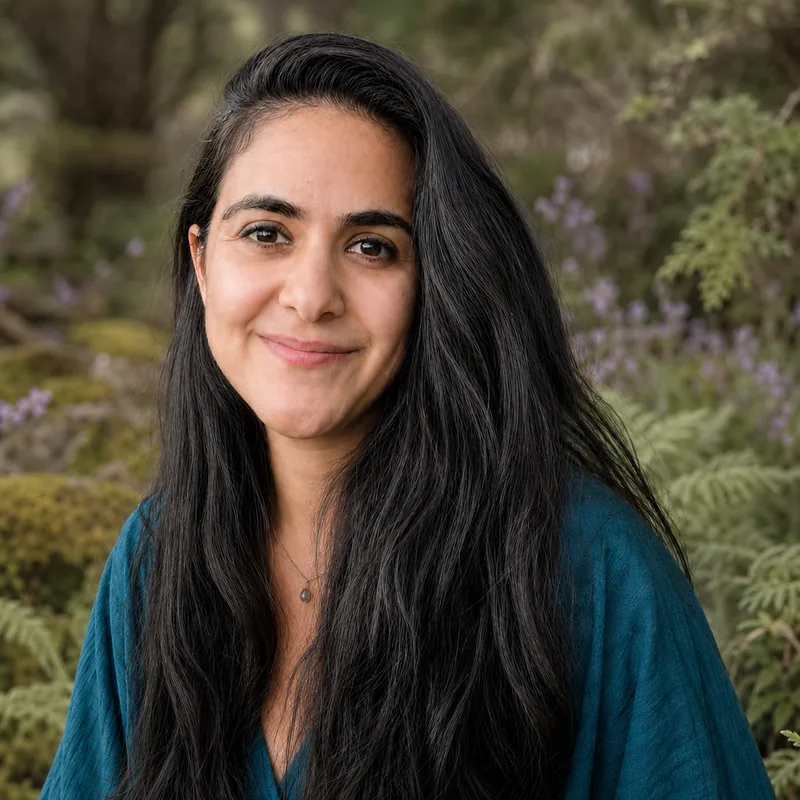
Therapy is not about forcing a part of yourself to change because another part dislikes it.
My practice is LGBTQIA+ and neurodiversity-affirming, and this is also grounded in lived experience: I identify as both neurodivergent and LGBTQIA+. My work is also shaped by my own journey of healing from trauma and finding more of myself.
These experiences have deepened my respect for how vulnerable it can feel to seek support, especially if you have spent years adapting, masking, staying strong, or trying to make sense of experiences that have not always been understood or made sense. They have also taught me that healing rarely follows a neat or linear path, and that feeling safe enough to be yourself is just as important as any particular technique.

-
At the heart of my work is IFS
At the heart of my work is IFS. In everyday terms, IFS offers a compassionate way of understanding why we can sometimes feel pulled in different directions. One side of us may want change, while another may hold tightly to a familiar way of coping because, at some point, it learned that this was necessary. I do not begin from the idea that these reactions are bad, broken or something to be removed. I begin by becoming curious about why they are there and what they have been trying to do for you.
Explore IFS therapy for more about parts, protection and Self.
-
There is a reason we cope the way we do
Even when a way of coping has become painful, exhausting or difficult to live with, it often makes sense in the context of what you have experienced. Rather than asking, 'How do we get rid of this?', I am more interested in understanding what it has helped you survive, avoid, soothe or manage; what it may still be protecting you from; and what it might need before something can shift.
Therapy is not about forcing a part of yourself to change because another part dislikes it. We can slow things down, listen more carefully and make room for the whole picture. When a response no longer has to fight to be heard or defend its place, change can sometimes become possible without turning against yourself.
This is also how I approach addictive or compulsive processes. Whether a pattern involves substances or behaviours, I am interested in what it has come to do for you, rather than shaming you for needing it. We can look honestly at both the protection or relief it may offer and the cost it may now carry, and work towards greater choice rather than simply demanding that you stop.
-
How I work
IFS is my primary therapeutic home, but I am not rigid about method. I also draw on my understanding of trauma, relationships and attachment, the body and nervous system, and the ways difficult experiences can continue to affect us long after they have happened.
My work is flexible because no single method is right for every person. I bring education, research and clinical experience, alongside what I have learnt through my own life and healing. I do not want to fit you into a model. We can work together to find a pace and way of working that makes sense for you.
I draw on and integrate different therapeutic approaches so we can collaboratively pick and choose what works best for you at different times. Different people need different things at different points in their lives. We make room to understand what your parts have been doing for you, what they are carrying, and what they might welcome or feel uncertain about. With their needs and your experience guiding us, we explore ways for them to receive the support they need and feel safe enough to ease how hard they have been working, begin to release the burdens they carry, and have more choice. I bring my expertise and experience in therapeutic approaches, alongside my presence and curiosity. Together, we explore where to go and what feels helpful. You are the expert on you, and ultimately, the choice is yours.
You can explore individual counselling, couples counselling and support for children and families, including my work with ADHD and neurodivergence, trauma and shame, chronic pain and illness, and legacy burdens.
-
Training and professional development
My core counselling training is person-centred and humanistic. Continued learning informs a flexible, collaborative approach, with IFS at the heart of how I work today.
I have undertaken advanced IFS training in working with shame, anxiety and depression, as well as further IFS training specifically for therapeutic work with children. I offer Intimacy from the Inside Out (IFIO), an IFS approach to couples therapy, and I am a certified child and adolescent trauma therapist. My wider training informs the different approaches I draw on to support people with trauma and other experiences.
Continued learning is an important part of how I practise. My professional development has included training and teaching with some of the most influential voices in IFS, trauma, attachment and mind-body approaches, including Dr Richard 'Dick' Schwartz, Dr Daniel J. Siegel, Dr Bessel van der Kolk, Dr Jeanne Catanzaro, Dr Janina Fisher, Joanne Twombly, Frank Anderson and Dr Arielle Schwartz.
I also have a professional and research interest in psychedelic-assisted therapy. My research explored the potential of psychedelic-assisted therapy in relation to body dysmorphic disorder (BDD), and my professional development in this area has included training with the Multidisciplinary Association for Psychedelic Studies (MAPS). Psychedelic-assisted therapies remain an emerging and investigational field, and many psychedelic substances are tightly controlled under UK law. Any therapeutic work I offer in this area remains within the law, professional ethics and my scope of practice.
I continue to undertake further training, supervision and professional development so that my work remains reflective, ethically grounded and informed by developing research and clinical understanding.
Qualifications and selected training Explore my qualifications and further training
Core qualifications
- Person-centred and humanistic counselling foundations
- Diploma of Higher Education in Counselling
- BSc (Hons) Cognitive Behavioural Therapeutic Approaches — First Class Honours
Specialist training
- Internal Family Systems (IFS) IFS Institute, IFS UK and IFSCA; shame, anxiety and depression; children and adolescents
- Intimacy from the Inside Out (IFIO) IFS-informed couples therapy
- Introduction to Imago Relationship Therapy Further learning for work with couples
- Child and adolescent trauma training
- Online and telephone counselling
Selected professional development
- Trauma and attachment
- Body and nervous system approaches
- Gestalt and Focusing
- Creative therapeutic approaches
- Pluralistic and relational practice
- Bereavement and complex grief
Transform Trauma Oxford 2025
Conference learning on trauma, attachment and relationships, with speakers including Richard Schwartz, Bessel van der Kolk, Daniel Siegel and Jeanne Catanzaro.
Psychedelic learning and academic research
- MAPS Psychedelic Fundamentals (ongoing)
- IFS and psychedelic integration workshops
- As part of my BSc (Hons), I completed an academic systematic review exploring psychedelic-assisted therapy in relation to body dysmorphic disorder (BDD).
This is a selection of my qualifications, training and professional development, rather than a complete list.
-
Professional membership and ethics
I am an Accredited Registrant member of the National Counselling & Psychotherapy Society (NCPS), with the designation MNCPS (Acc.) and membership number NCPS8231.
Counselling and psychotherapy are not regulated by law in the UK, so anyone can use those titles. The NCPS register is accredited by the Professional Standards Authority, the independent body that sets standards for registers in health and care professions like these. Being on the register means that I am qualified, have regular clinical supervision, hold professional insurance, and work within the NCPS Code of Ethics.
You are welcome to check my membership on the NCPS register by searching for my name or membership number.
If something in our work together concerns you, I hope you will feel able to raise it with me so that we can try to address it together. If that does not feel possible, or does not resolve things, you can contact the NCPS through its complaints procedure, or by emailing [email protected].
-
Research, meaning and the whole person
I value research, education and psychological understanding, but I do not believe a person can be reduced to a diagnosis or a set of symptoms. My work is informed by contemporary understanding of trauma, attachment, development, memory, the brain and nervous system, while always keeping sight of the whole person and the wider context of their life.
There can also be space in therapy for the body, relationships, identity, culture, meaning, intuition, connection and the aspects of human experience that can be difficult to put into words. I do not impose a spiritual or philosophical framework or ask you to believe anything that does not fit for you.
I simply recognise that for some people, healing includes experiences and questions that sit alongside, or beyond, what can easily be measured or explained. We make room for that with the same curiosity and respect we bring to every other part of your experience.
-
My role
Although I bring training, experience and therapeutic knowledge into the room, I do not see myself as the expert on your inner world. You are the expert on you. My role is to bring my experience and curiosity alongside what you already know or sense about yourself, while staying open to what may not yet have words, be fully conscious, or may be held more quietly beneath the surface.
You do not need to arrive already understanding yourself. We can become curious about it together, approaching what emerges with greater clarity and compassion.
You may come to therapy with feelings, reactions or ways of coping that you wish were different - perhaps anxiety, anger, avoidance, people-pleasing, perfectionism, shutting down, feeling driven, or becoming overwhelmed. I will not treat these as evidence that there is something wrong with you. Together, we can understand how they came to make sense, what they may have been trying to protect or provide, and what you need now.
-
Every session is unique
The shape of therapy can vary because your needs can vary. Some sessions may bring attention to the past, while others may focus on what is happening in the present, in your body, relationships, work or day-to-day life. At times, practical tools and strategies may be useful; at other times, the work may be quieter and more experiential.
When and how deeply we explore is collaborative and led by what feels possible for you. There is no requirement to disclose everything, revisit experiences before you are ready, or work in a particular way simply because a therapist thinks you should.
-
Our therapeutic relationship
The relationship between therapist and client matters. I want therapy to be a place where you can bring uncertainty, disagreement, humour, discomfort, ambivalence and all of yourself, rather than feeling that you need to be a 'good client'. If something between us does not feel right, I want there to be room to talk about it.
Safety is not something I assume because we are in a therapy room. It is something we build together through consistency, honesty, consent, respect and attention to your experience. I am human and I will not always get everything right.
If I misunderstand you, miss something important or something between us feels uncomfortable, my responsibility is to be willing to reflect, listen, take ownership where needed and work towards repair with you. I believe that being able to acknowledge and repair moments of disconnection can itself be an important part of a safe therapeutic relationship and healing.
-
You are not tied in
I recommend beginning with an initial session before making any further commitment. The fit between client and therapist is important, and sometimes a therapist can be skilled and experienced yet still not feel like the right person for you. There is no obligation to continue beyond the initial session, and I will respect your decision if you decide that another therapist or another kind of support would suit you better.
My practice is currently full, so I am not able to offer new appointments straight away. You are welcome to enquire about joining my waiting list, although joining it does not guarantee an appointment.
-
 NCPS accredited
Professional, ethical practice
- Online internationally Work with me wherever appropriate
- Totnes, Devon Face-to-face sessions
- Adults & children alike Couples & young people too

What now?
You do not need a referral from your GP to begin counselling. If you would like to know more, or to explore whether working together may feel right for you, you are welcome to get in touch.
You can contact me by email or call me on 07761 489 931. If I am with a client or otherwise unavailable, please leave a message and I will return your call within two working days.
Read about fees and practical arrangements.
My practice is currently full, so I am not able to offer new appointments straight away. You are welcome to enquire about joining my waiting list, although joining it does not guarantee an appointment.